Love That Lasts: What Beavers Teach Us About Partnership
Love That Lasts: What Beavers Teach Us About Partnership
Valentine’s Day tends to celebrate love as a single moment… a card, a bouquet, a reservation. In nature, love is rarely that brief. Instead, it shows up as shared work and long-term commitment. Few animals demonstrate this better than the North American beaver. At Osage Park, beavers offer a living lesson in what lasting partnership look like!
Do Beavers Really Mate for Life?
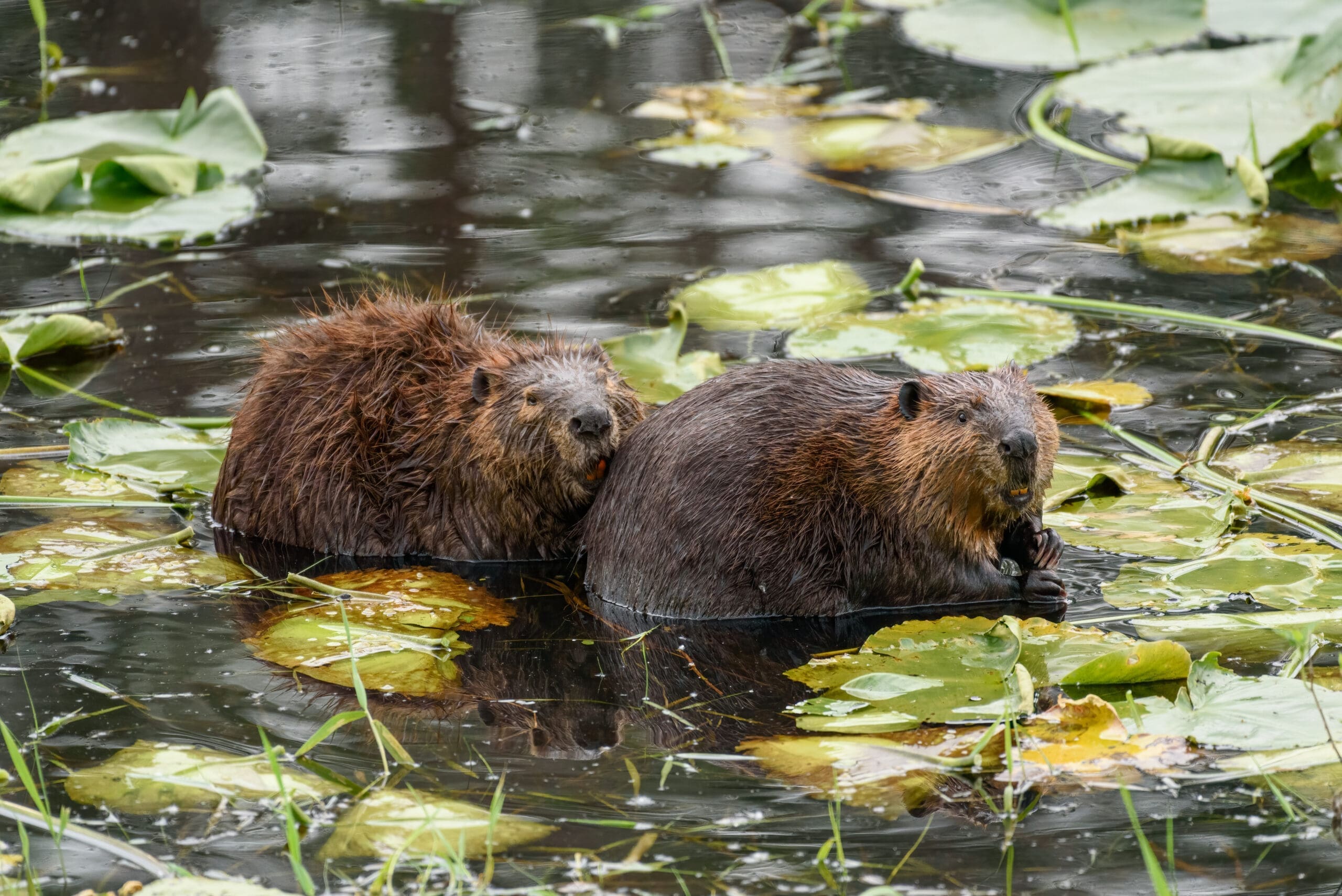
Yes! Beavers are socially monogamous, forming long-term breeding pairs that often remain together for life. Once paired, a male and female establish a shared territory centered around a lodge and a dam system, raising their young (called kits) together year after year.
Beaver families usually include a bonded adult pair, kits from the current year, and sometimes older offspring (called yearlings) from previous years.
This structure allows beavers to divide labor, share responsibility, and pass down learned behaviors.
Shared Work
Beaver parenting is a full-time commitment. Both adults participate in:
- Building and repairing dams
- Maintaining lodges with underwater entrances
- Harvesting and storing food for winter
- Protecting kits from predators
This shared workload increases the survival of their young and stabilizes the family unit across seasons. From an ecological perspective, long-term pair bonding reduces energy costs and improves reproductive success.
When Partnership Builds an Ecosystem
Beavers are often called ecosystem engineers because their behavior physically reshapes the environment. By building dams, beavers slow flowing water and create wetlands that would not otherwise exist.
These wetlands:
- Reduce erosion and flooding
- Improve water quality
- Recharge groundwater
- Create habitat for birds, amphibians, insects, fish, and mammals
Because so many species depend on beaver-created wetlands, beavers are also classified as a keystone species, one whose influence far outweighs its population size.
At Osage Park, today’s wetlands are the result of beaver families working together over generations. Their partnership didn’t just create a home. It created a community.
What Beavers Can Teach Us About Partnership
Understanding beaver pair bonds reveals a broader ecological truth: long-term relationships create stability. In the wild, cooperation supports not only families, but entire ecosystems.
This same principle guides conservation and land stewardship at Osage Park—protecting natural systems so they can thrive well into the future.
A Valentine’s Day Inspired by Nature
This Valentine’s Day, take a cue from the beavers and celebrate connection in a way that’s meaningful, grounded, and shared.
Plan a date at Osage Park:
-
Walk the boardwalk at sunset, when the wetlands grow quiet and reflective
- Stroll through the path lined with trees in the shape of a heart
-
Watch for birds and wildlife settling in for the evening
-
Grab dinner from the nearby food trucks
-
Play a round on the pickleball courts
-
Continue the evening at The Quiver Archery Range
Love That Lasts
Beavers remind us that the strongest bonds aren’t built in a single day. They’re built slowly, through shared effort and mutual care, shaping something bigger than ourselves along the way.
This Valentine’s Day, celebrate love that lasts—the kind that builds, protects, and leaves the world better than it found it.