

Explore The Museum
at The Peel Museum & Botanical Garden
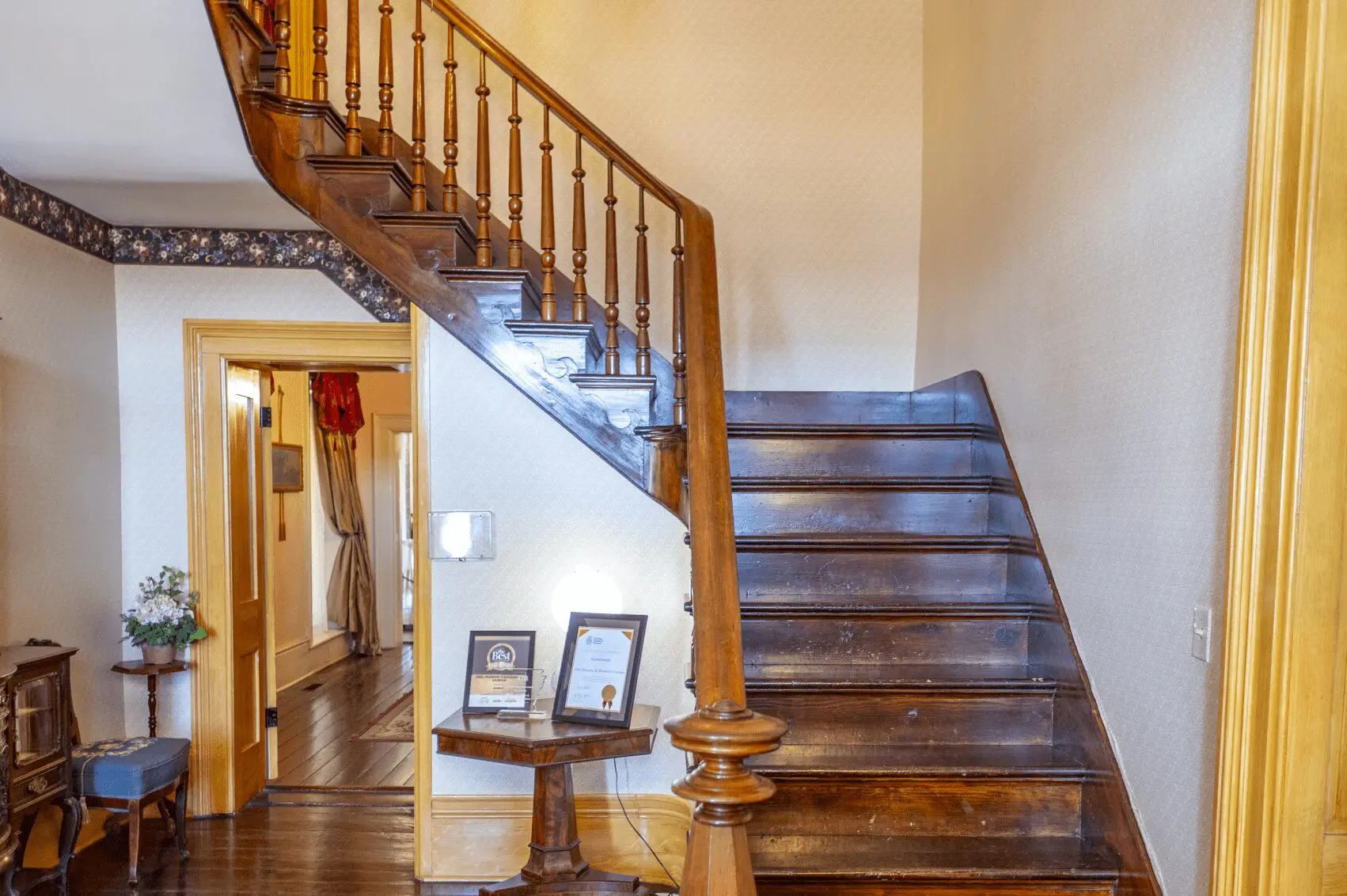
Foyer
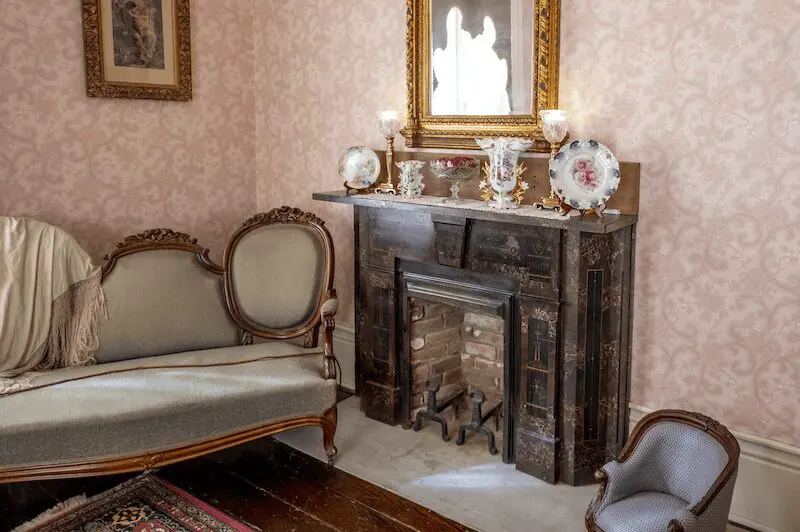
The Parlor
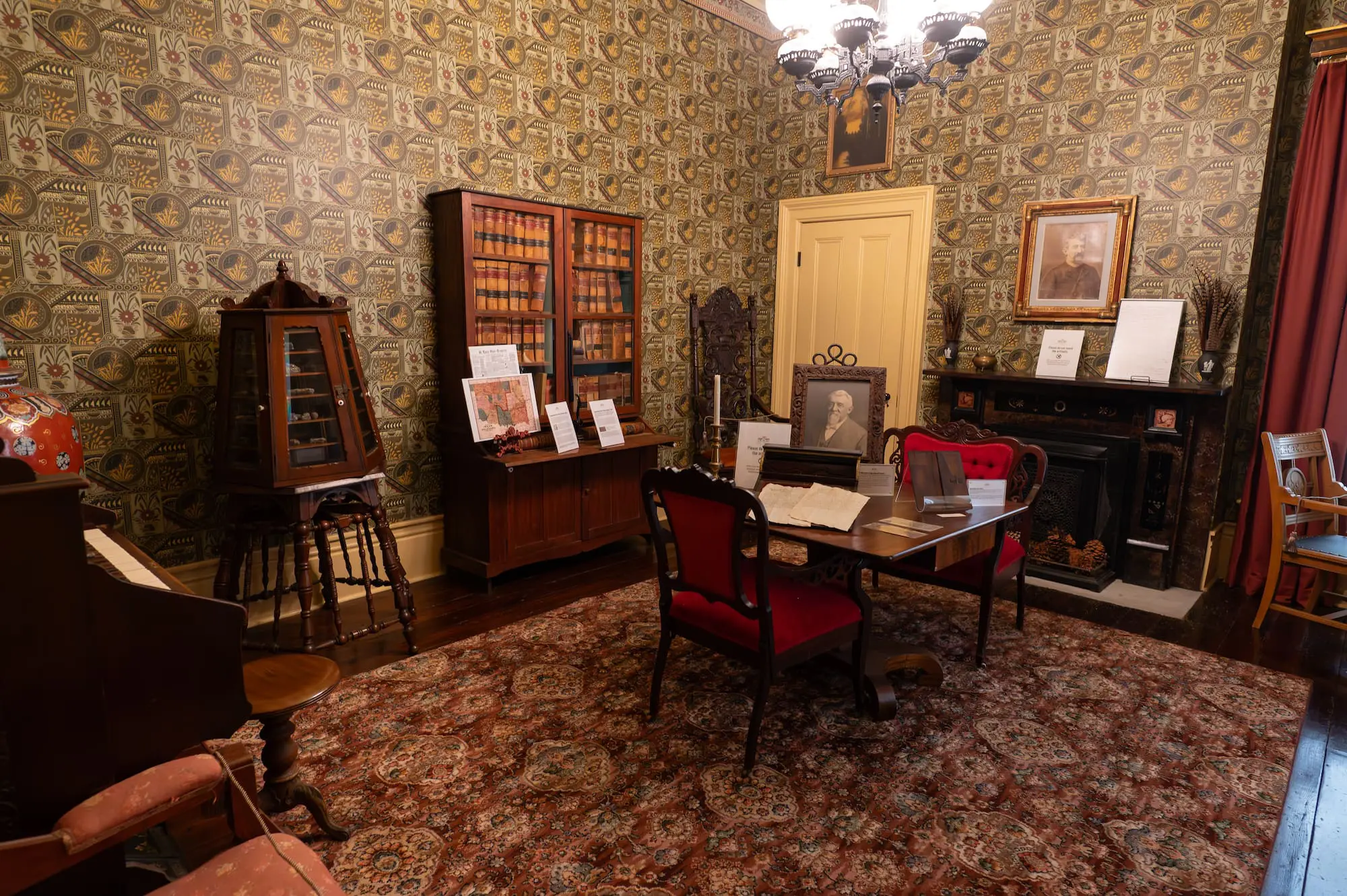
The Study
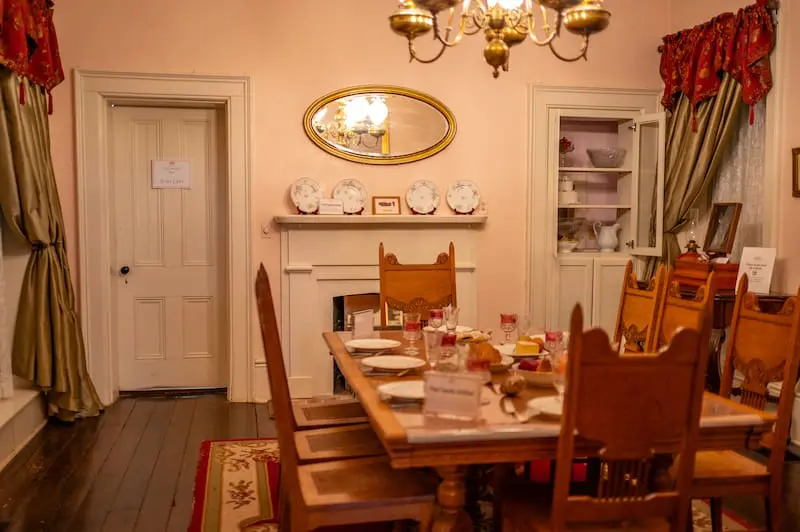
The Dining Room
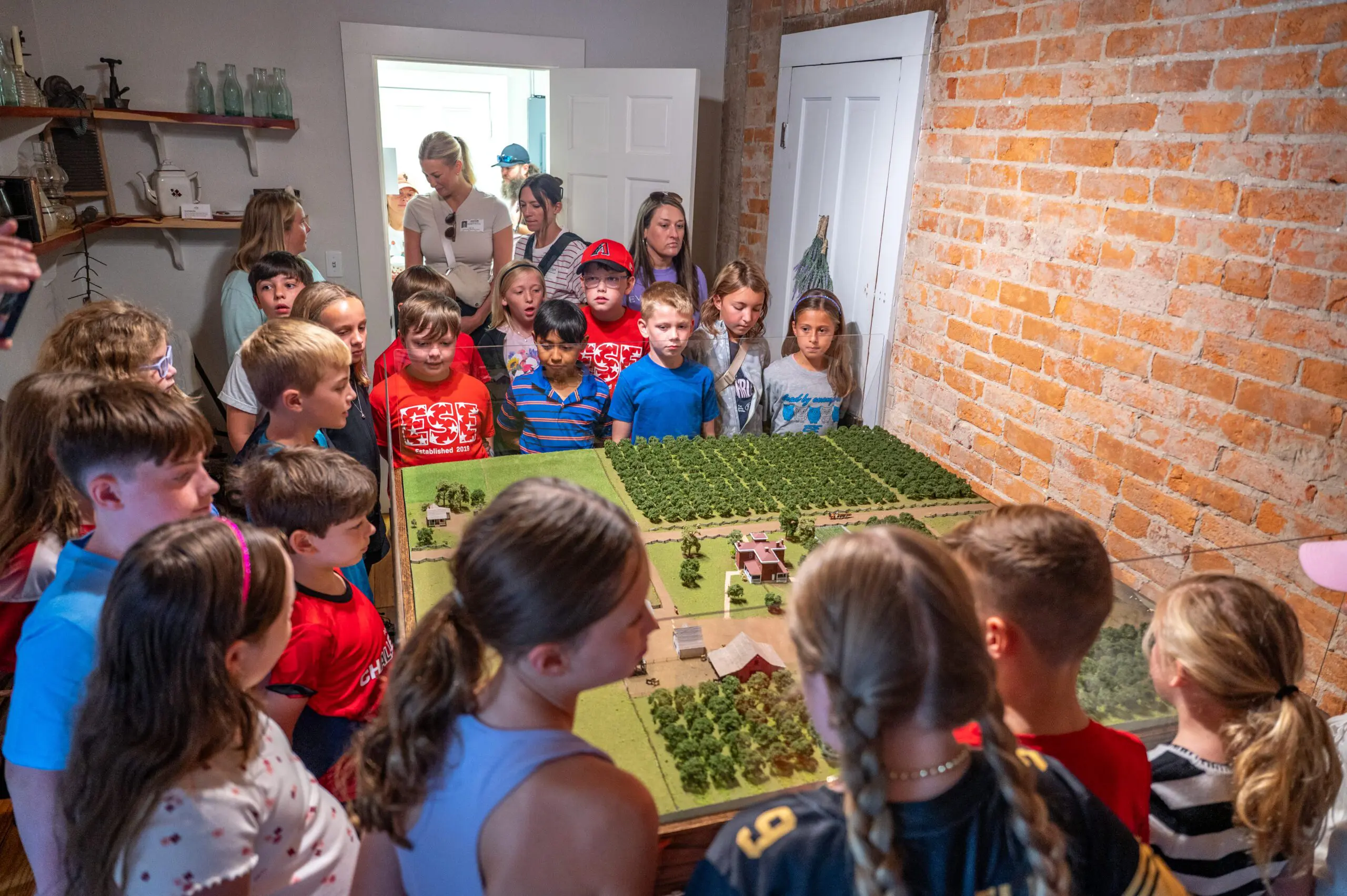
Outdoor Kitchen
Originally built as a separate structure, the Outdoor Kitchen reflects common 19th-century practices aimed at reducing fire risk from wood-burning stoves. It houses the home’s only wood-burning fireplace, larger and deeper than the others, used for preparing meals and preserving food. Today, a detailed scale model of the Peel property, showing how it looked in 1875, is on display here to help visitors imagine what the homestead once looked like.
Upstairs
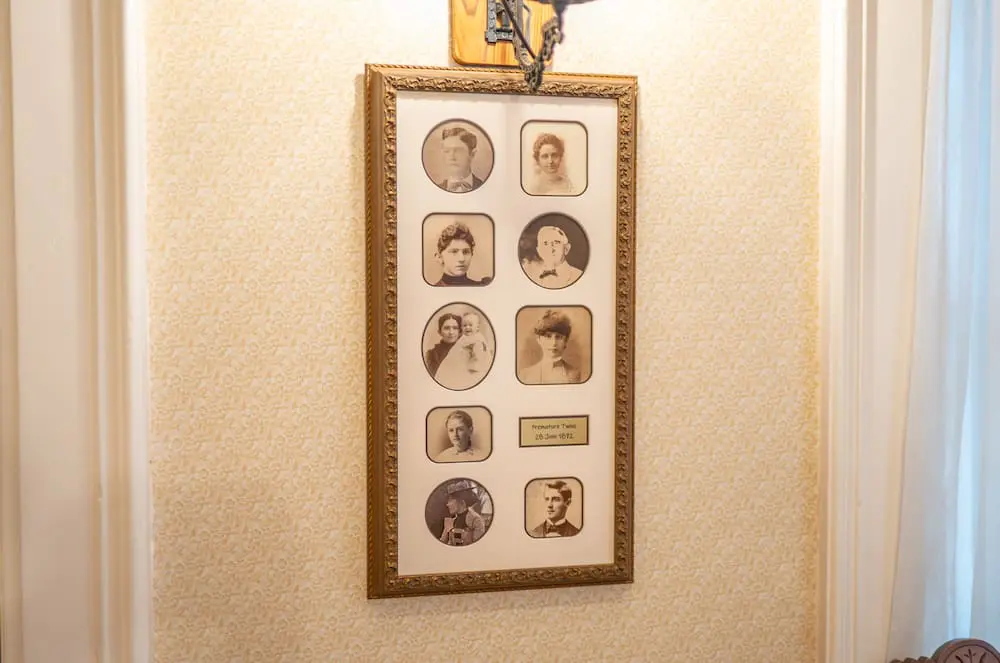
The rooms upstairs are more simply decorated compared to those downstairs, reflecting their private nature. Guests were not invited into the upstairs portion of the home, which housed the family’s personal rooms and bedrooms. These spaces contained some of their belongings, along with photographs of both immediate and extended family members.
When the family moved into the home, the oldest Peel child was 21, while the youngest had not yet been born. In fact, Mary Emaline was pregnant with their youngest child, Ruby, who was the only one of their children born in this house. Alice was already married and never lived here, and it is believed that James, who was already practicing law by 1875, didn’t live here either. The seven other Peel children would have lived in the house until they established themselves in society, either through marriage or career.
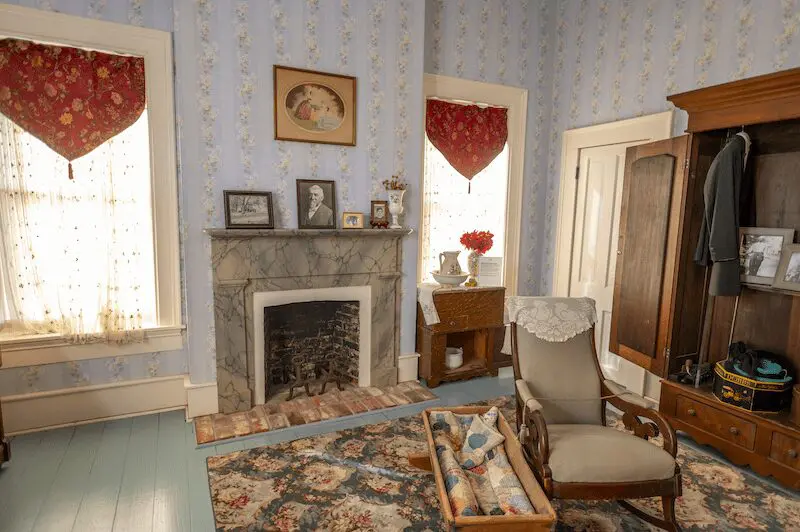
Main Bedroom
The Main Bedroom served as a private retreat for Samuel and Mary Peel, offering a glimpse into domestic life for a prominent couple in the late 1800s. The horsehair-filled mattress reflects the comfort and quality typical of well-off families of the era. The restored blue-painted floor reveals the home’s original palette, discovered through careful testing during renovation. On the bed, a Baltimore friend quilt—handmade by one of the Peels’ descendants—connects the family’s history across generations.
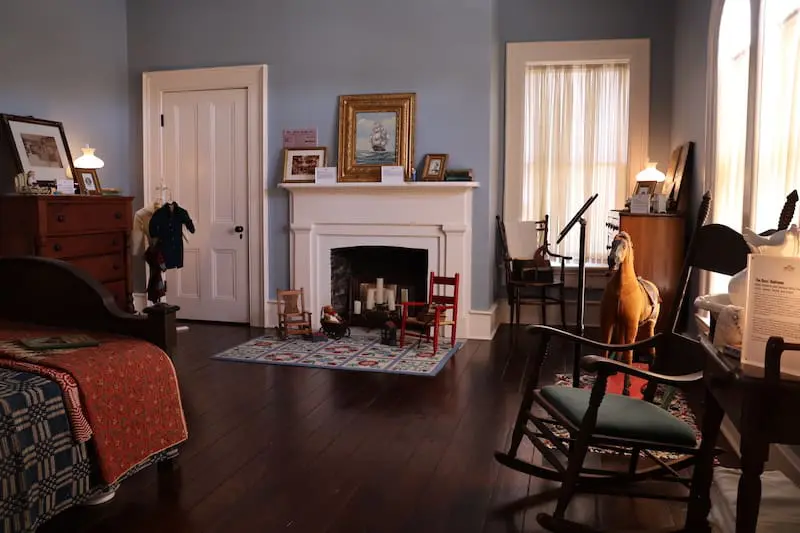
Boys’ Room
This room was shared by two the three Peel sons, David and Frank. It is believed that James was already practicing law by 1875 and did not live in the home. Each of their sons went on to lead notable careers in law, banking, and journalism. Furnishings reflect both their childhood and early adulthood, with items like the Remington typewriter used for schoolwork and correspondence, and the Victrola phonograph offering a glimpse into early 20th-century home entertainment. A family heirloom older than the house itself, “Bucky” the rocking horse was cherished by generations of Peel children and remains a beloved symbol of their legacy.
Girls’ Room
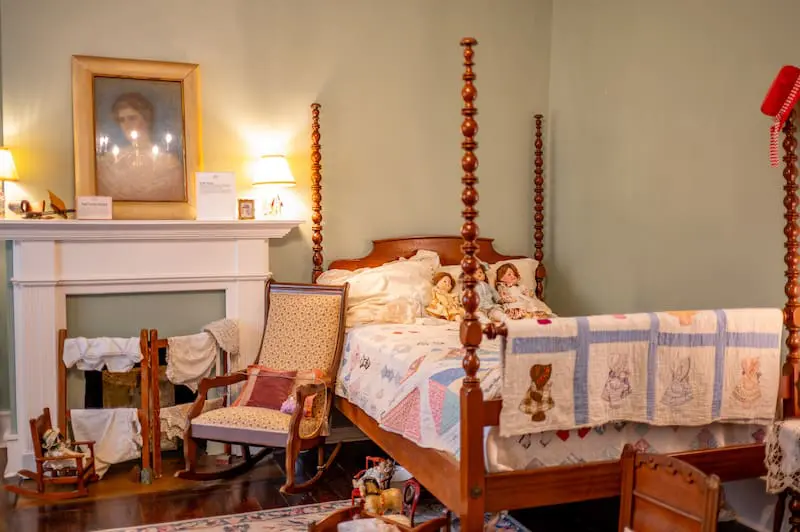
The Peel family had six daughters: Alice, Fannie, Elizabeth, Kate, Minnie, and Ruby. The four youngest daughters spent the most time in this space, preparing for their futures as wives in the late 1800s. Objects like the hair receiver reflect period beauty practices and ideals, as saved hair was often used to create decorative hair art or practical items like pincushions and stuffing for small household goods. The tatted bed covering, made by hand over seven years, showcases the skill and patience valued in domestic crafts. A portrait by Texas artist Emma Richardson Cherry ties the room to a broader history of women’s lives and creative expression during the era.