

What the Peel Farm Looked Like in the 1800s
In 1875, Samuel W. Peel’s newly completed Italianate mansion stood proudly at the heart of one of Bentonville’s most ambitious farms. Thanks to careful research — including Peel’s own sales brochure, comparison with regional architecture, and period farming practice — the model built by Kiwi Mill brings to life the working farm and family home almost exactly as it was then. Here’s a walk‑through of what you would’ve seen if you had visited.
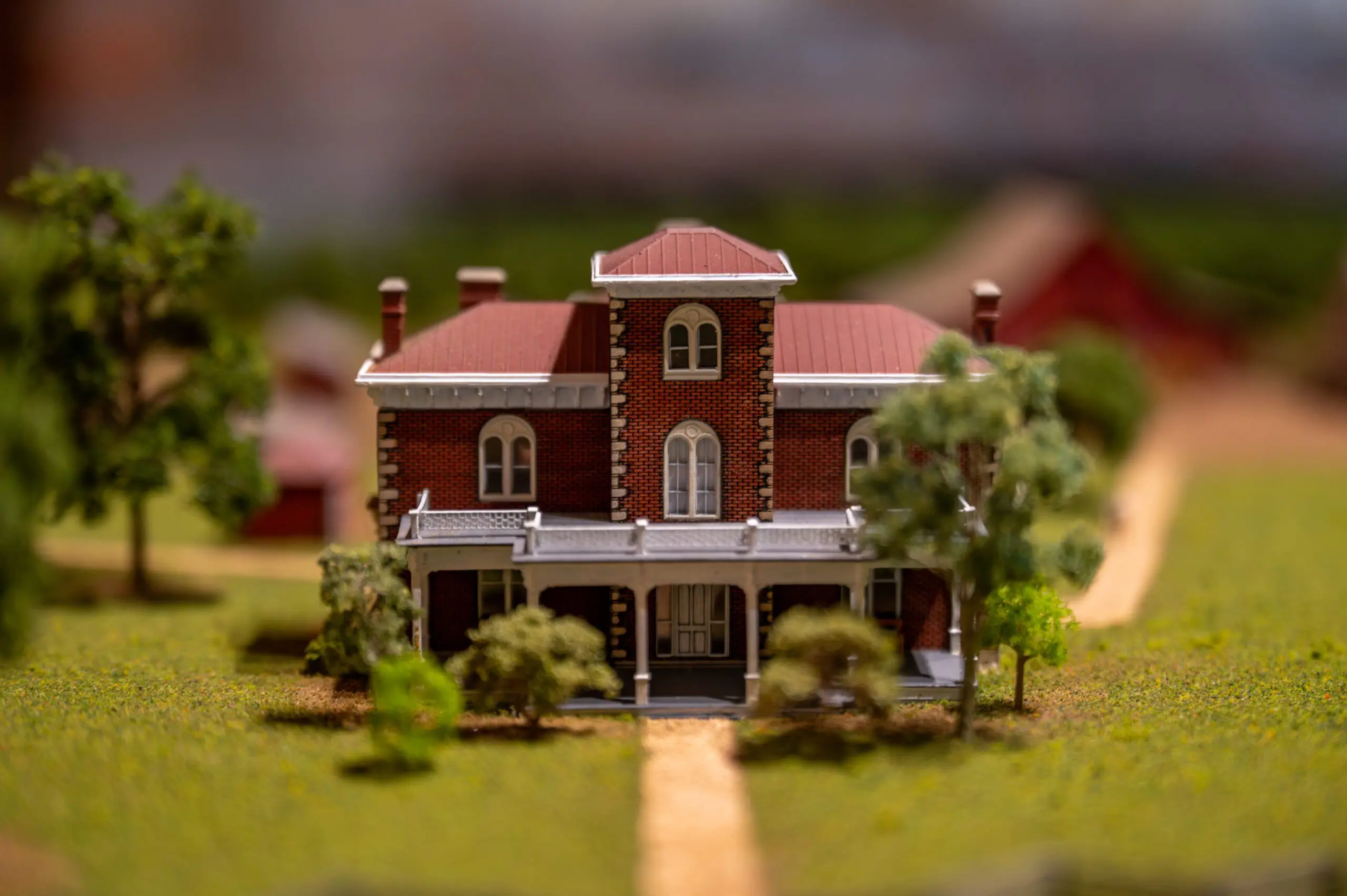
The House & Landscape
- The home, freshly completed in 1875, was built in red brick (not stucco) from materials produced on the property. The distinctive Italianate style is evident in its tall windows (arched and rectangular), prominent cornices, the bracketed eaves, a central tower rising above the rest of the house, and large porches.
- The grounds stretched across 100‑180 acres: as recorded, Peel originally used the property as a tobacco and cotton farm, before converting much of it into one of the earliest large apple orchards in Northwest Arkansas.
- Mary Emaline Peel, known locally for her gardening, maintained a large vegetable garden, which in the model is abundant and varied. The beloved garden was more than just aesthetic—it was functional, providing much of the family’s fresh produce.
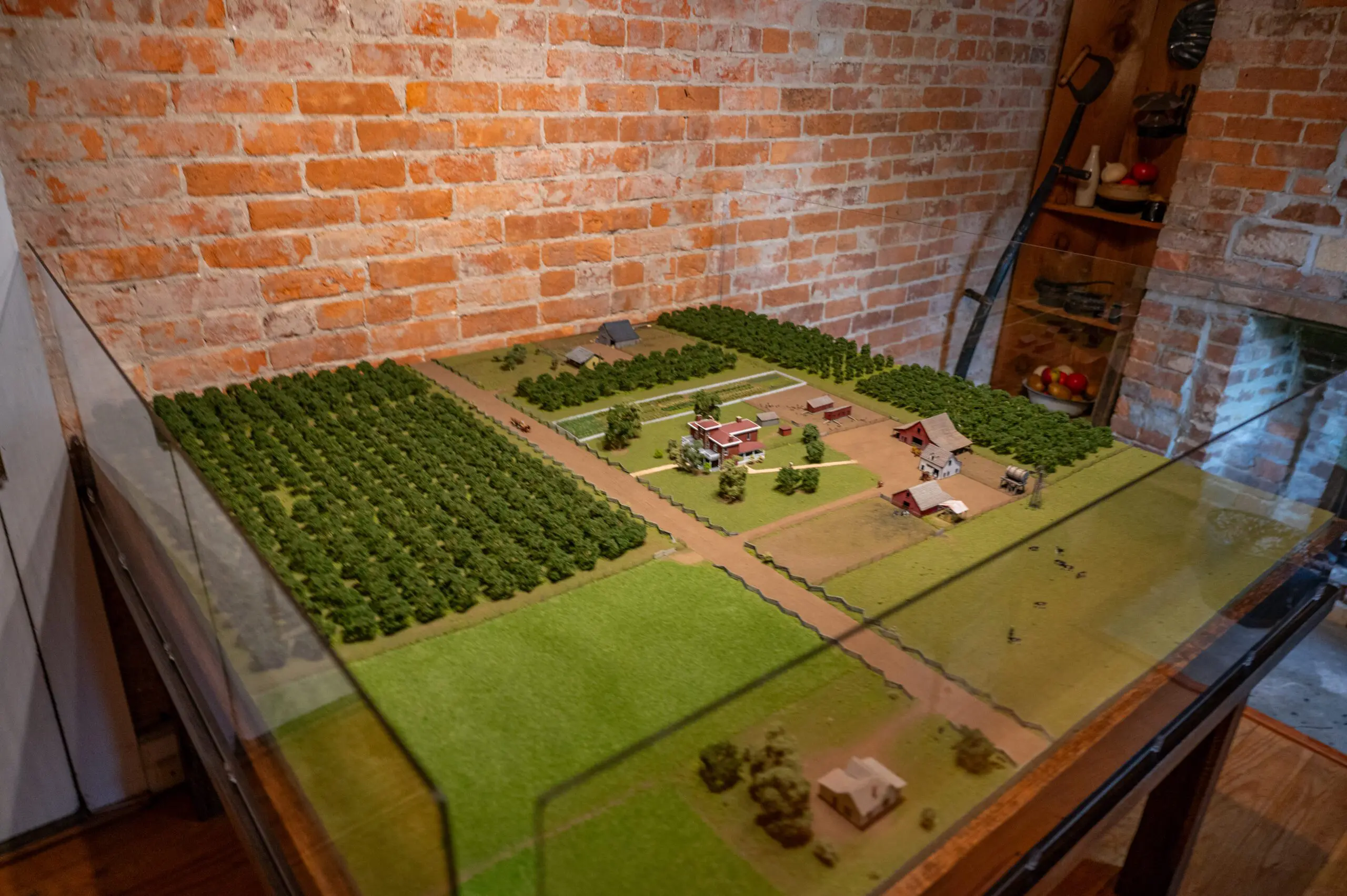
Outbuildings, Orchards, and Pastures
-
Surrounding the house were multiple outbuildings — barns, stables, chicken houses, tool sheds, and quarters for workers or animals. Some details are reconstructed from common regional farm design of the late 19th century, since Peel’s records don’t always specify materials or shapes. For example:
-
The barns were likely timber‑frame with board siding; pitched roofs (often metal or wood shingles) to shed rain and snow.
-
A stable for the horses used for travel and farm labor.
-
A chicken coop or poultry house, modest but sufficient to support the family’s needs.
-
Possibly a small dairy or milk house, or places for cow shelter, given the presence of cows.
-
-
The orchard: Apple trees dominate much of the grounds, planted in orderly rows. The model shows a variation in tree height (some young, some mature), which reflects the fact that orchards were planted over time, replacing or adding trees as old ones died or needed to be replaced.
-
Pastures: Open cleared land where cows grazed and horses roamed. Fencing would mark the property, pasture boundaries, and pen areas. There are paths or dirt lanes leading to barns, fields, and across pastures.
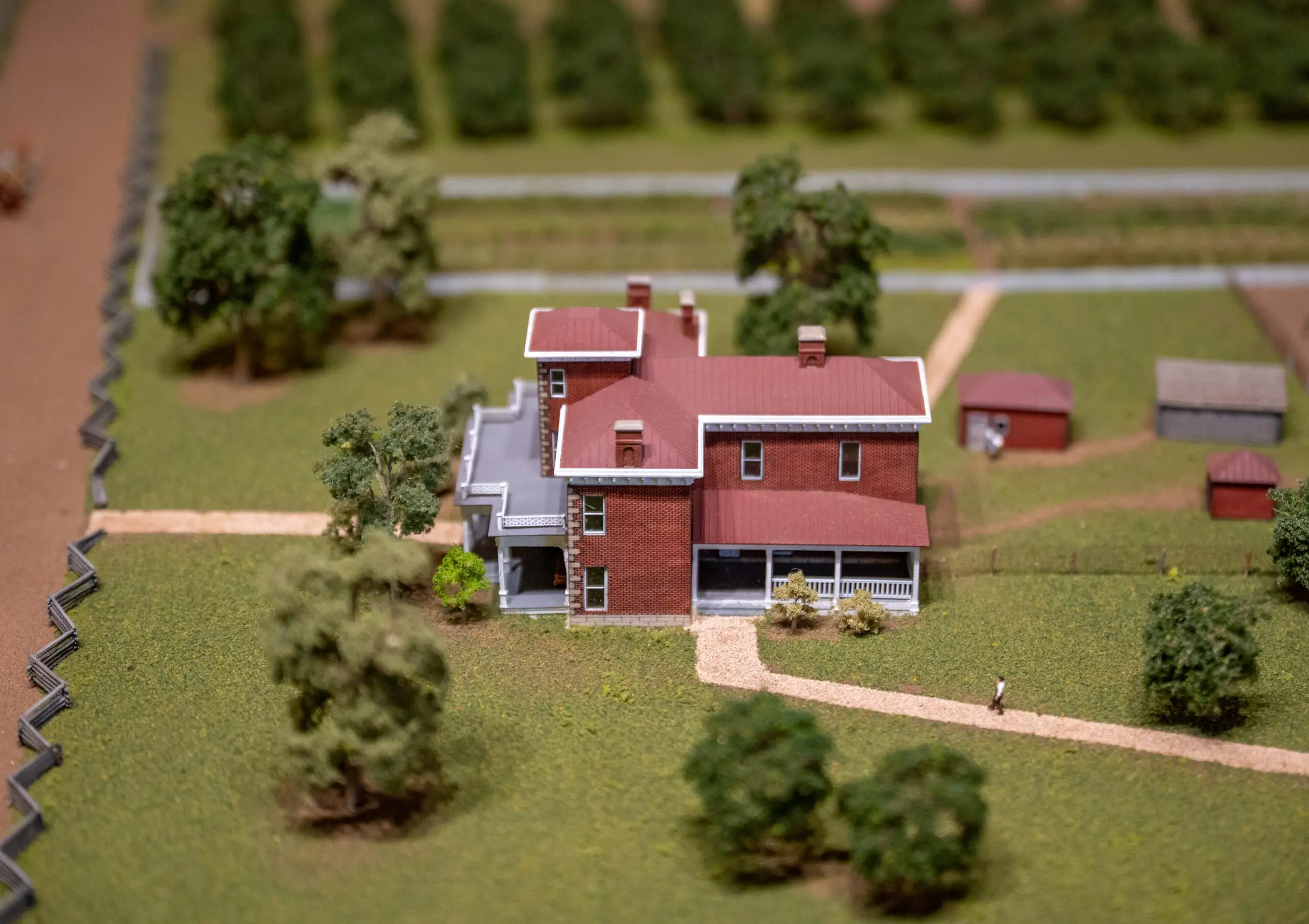
Daily Life & Activities
- Animals: The model shows cows, chickens, and horses in various states, including grazing, resting, and walking. In 1875 a farm this size would have many animals to support both labor and subsistence: horses for riding, plowing, transport; cows for milk, maybe beef; chickens for eggs.
- Garden and crops: Mary Emaline’s vegetable garden would’ve been busy, with beds of seasonal vegetables, perhaps herbs, maybe flowers. Kitchen gardens were central to family life.
- Seasonal cycles: Apart from apple orchard growth, fields may have been planted or fallowed depending on the season. Harvest times, pruning of orchards, caring for livestock—these seasonal rhythms would shape daily routines.
- Outbuildings in use: barn for storage of tools, feed, hay; stable for horses; chicken coop for egg gathering; sometimes a smokehouse or meat curing area; possibly a springhouse or ice house for preserving dairy/meats.
Imagining This Property in the 1800s
Picture arriving along a dirt road, the sound of horses and chickens, the scent of the earth and apple blossoms. You see the red brick walls of the house, the wraparound porch, shaded by young trees. Worker’s barns near the back, apple trees stretching out in precise rows to one side, vegetable gardens close to the house, fenced pastures where a horse pulls a plow or grazes. Mary Emaline peering over her garden rows, perhaps holding baskets. It is both functional and beautiful: a place of work, family, and aspiration.
Plan Your Visit to See the Model in Person
Experience Arkansas history up close at the Peel Museum. The handcrafted model of the Peel Home and farmstead as it looked in 1875 is on display now—inviting visitors of all ages to explore daily life in the 19th century. From the orchards and gardens to livestock and outbuildings, every detail tells a story.
Visit the Peel Museum & Botanical Garden in Bentonville, Arkansas to walk the grounds, tour the historic home, and see the model that brings the past vividly to life.
Bring your curiosity—and maybe a few questions for our team!
Click here to learn more about visiting the Peel Museum & Botanical Garden.
Click here to open Google Maps to the Peel Museum & Botanical Garden