

How Coler Mountain Preserve Is Helping Study Eastern Screech-Owls
Coler Mountain Bike Preserve is best known for its trail system, forested landscape, and outdoor recreation in Northwest Arkansas. But beyond the trails, Coler is also contributing to an important wildlife research effort focused on one of the region’s most fascinating nocturnal birds: the Eastern Screech-Owl.
Through its partnership with the Ozark Bird Conservancy, Coler is helping researchers study how screech-owls use habitat in a rapidly changing region. What began as acoustic monitoring inside the preserve now connects to a broader Urban Screech-Owl Project across Northwest Arkansas, where scientists are studying how urbanization, forest structure, and nesting opportunities may shape the future of this species.

Mitchell Pruitt, Ph.D. | Executive Director
Who Is the Ozark Bird Conservancy?
The Ozark Bird Conservancy is a nonprofit organization dedicated to conserving birds and their habitats using science and education that promotes habitat resiliency, engages the public in the research process, and informs meaningful public and private conservation decisions.
They are committed to fostering a harmonious relationship between people and nature through innovative research and community engagement:
- Improve the lives of birds and people through research that informs sound conservation decisions.
- Bridge the disconnect between science and the public through education, outreach, and public involvement at every step of the research process.
- Provide decision makers with science-based deliverables that result in habitat resiliency and maximized human interest in ecosystems.
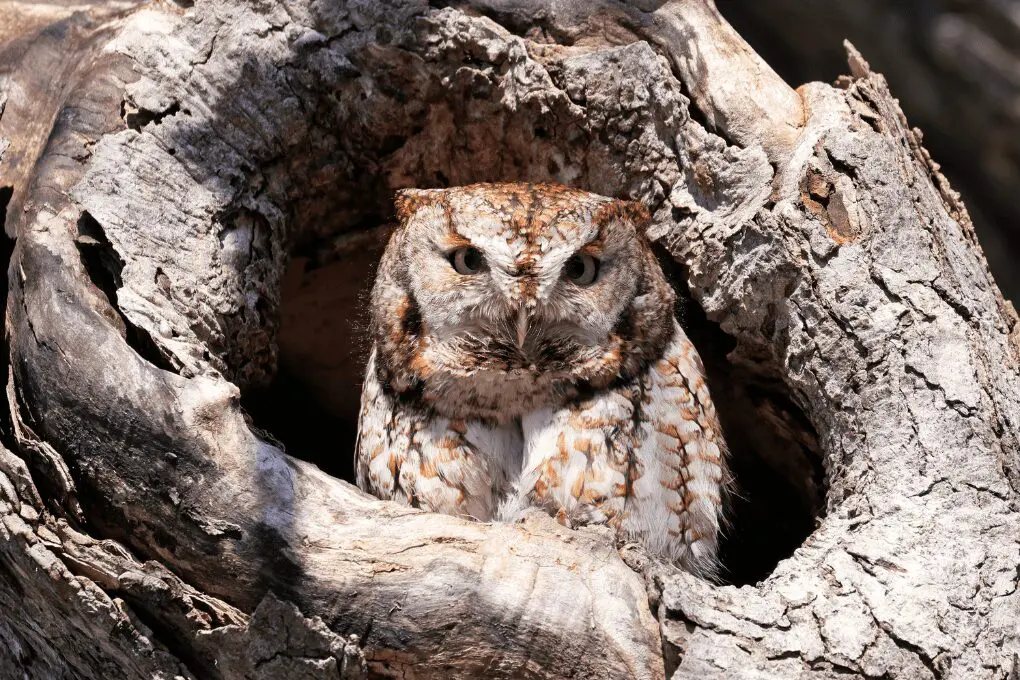
Why Eastern Screech-Owl Research Matters in Northwest Arkansas
The Eastern Screech-Owl is found across much of eastern North America, yet many aspects of its life history remain poorly understood. Like many owls, it is difficult to study because it is active at night, relies on camouflage, and often nests in tree cavities hidden from view.
That makes research especially important in places like Northwest Arkansas, where rapid growth and land use change are reshaping the landscape. Even though Eastern Screech-Owls can live near people in some suburban and urban areas, researchers are still working to understand how well they persist in those environments over time.
This is one reason the Ozark Bird Conservancy’s Urban Raptor Project has made the Eastern Screech-Owl a focal species.
"Ozark Bird Conservancy marks first year of raptor research"
KUAF Interview | December 10, 2025
Coler’s Role in the Urban Screech-Owl Project
Coler Mountain Bike Preserve is one piece of a larger regional study examining raptor habitat use and population trends across an urban-to-rural gradient in Northwest Arkansas.
Researchers are surveying forests in both urban and rural settings to identify active Eastern Screech-Owl territories and better understand what makes a site suitable, or unsuitable, for nesting and survival. By including landscapes like Coler, the project can compare preserved greenspace with other habitat types across the metro area.
This approach helps researchers move beyond simple presence-or-absence questions and look more closely at the conditions that may influence owl habitat use in a changing region.
Acoustic Monitoring at Coler Mountain Preserve
Listening for Nocturnal Wildlife
In 2025, researchers placed an acoustic listening device within Coler Mountain Bike Preserve to record nighttime sounds across the landscape. These devices are designed to detect the distinctive calls of screech-owls and other wildlife without disturbing the animals.
Acoustic monitoring is an effective tool for studying nocturnal birds because it allows scientists to collect information over time while minimizing human presence in sensitive habitats.
What Researchers Found
When the recordings from Coler were analyzed, no Eastern Screech-Owl calls were detected during the monitoring period.
That result was meaningful.
Rather than ending the study, it helped guide the next step in the research. If screech-owls were not actively using the preserve at that time, researchers could begin asking why, and whether habitat improvements, such as nest boxes, might help support future use.
What the Broader Research Is Trying to Understand
The Urban Screech-Owl Project is not only about finding where owls are present. It is also focused on understanding how Eastern Screech-Owls respond to urbanization and land use change.
Researchers are studying several key questions, including:
- Which forest characteristics make habitat suitable for Eastern Screech-Owls
- Whether urban green spaces provide enough nesting opportunities
- How adult owls use space across developed and less-developed landscapes
- How urban pressures may affect survival and nesting success
The project also uses GPS tracking technology to study adult home ranges, helping researchers understand how owl movement and habitat use may change in areas with greater human activity.
Why Urban Environments Can Be Challenging for Screech-Owls
Eastern Screech-Owls can sometimes live surprisingly close to people, but urban and suburban environments still present real challenges.
These pressures may include habitat loss, fewer natural nesting cavities, greater exposure to toxins such as rodenticides, and increased competition or predation from species that adapt well to human-dominated landscapes.
Researchers are also looking at whether some green spaces appear suitable on the surface but still lack the features owls need to thrive. In Northwest Arkansas, citizen science observations have suggested that Eastern Screech-Owls may be declining in some suburban and urban areas, even where green space remains.
That makes projects like this one especially important.
Why Nest Boxes Matter
Eastern Screech-Owls naturally nest in tree cavities, often in older trees shaped by decay or natural damage. In younger forests, managed greenspaces, and residential areas, those cavities may be less common.
Nest boxes help fill that gap by mimicking natural nesting spaces.
For the Urban Screech-Owl Project, nest boxes serve two important purposes. First, they may increase available nesting habitat for Eastern Screech-Owls across Northwest Arkansas. Second, they create a valuable research opportunity by allowing scientists to monitor occupancy, nesting success, and survival over time.
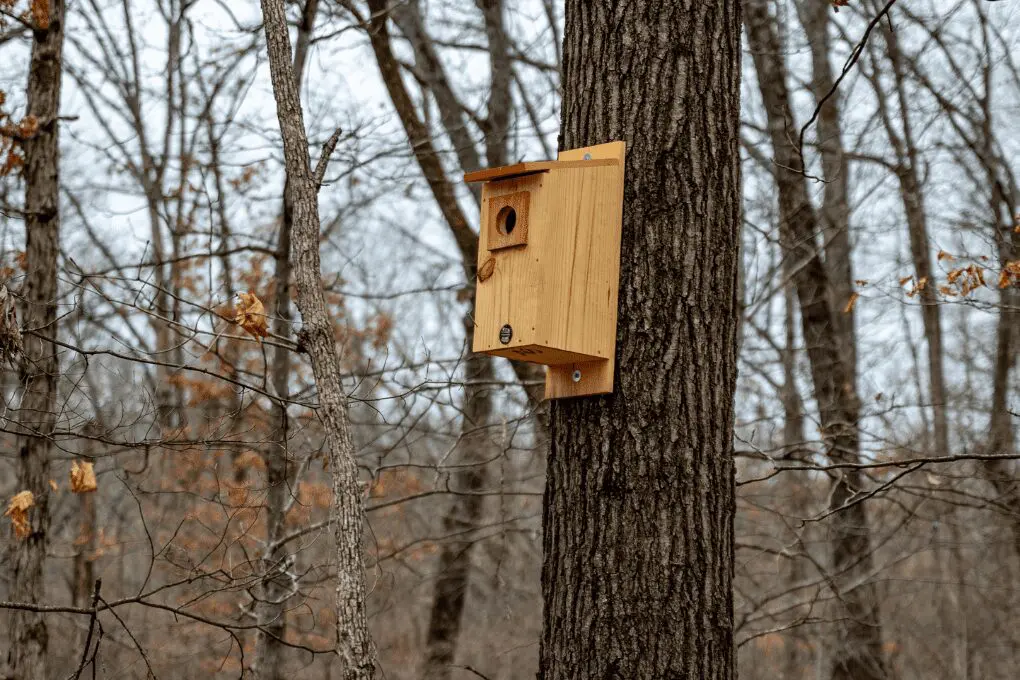
The nest box at Coler can be viewed from Pedal Assist and Oscar’s Loop trails
The Nest Box Program at Coler and Across Northwest Arkansas
Building on the first phase of research, the Ozark Bird Conservancy launched a regional nest box program in Northwest Arkansas, including sites where screech-owls were not detected during earlier surveys.
Coler Mountain Bike Preserve is one of those sites!
A specially designed Eastern Screech-Owl nest box was installed roughly 15 feet high in a tree within the preserve. It will be monitored throughout the breeding season by researchers and trained volunteers checking for activity and collecting data on nesting behavior.
Across the broader program, the goal is to deploy nest boxes throughout the region to expand nesting habitat in green spaces and yards. The project is also designed to involve community members, including sponsors and citizen scientists, in data collection and long-term conservation.
What Researchers Hope to Learn from the Nest Boxes
The nest box program is expected to provide valuable insight into several important questions:
Is the Habitat Suitable for Owls?
If a nest box is occupied, that can indicate the surrounding habitat offers the right mix of cover, prey, and nesting conditions.
How Successful Are Nesting Attempts?
Monitoring can help researchers understand how many young are raised successfully and whether some habitats produce better outcomes than others.
How Long Do Owls Persist in an Area?
Repeated monitoring may reveal trends in site fidelity, survival, and long-term use of nest boxes across the region.
Can Nest Boxes Help Reduce Predator Pressure?
Researchers have noted that some younger forests may also support species such as Barred Owls, which can be a predator of Eastern Screech-Owls. Nest box design and placement may help improve nesting protection in some settings.

What Comes Next
With the nest box now in place and the broader Urban Screech-Owl Project underway, researchers will continue tracking how Eastern Screech-Owls respond to habitat across Northwest Arkansas.
At Coler, that means watching closely to see whether a screech-owl eventually chooses to use the preserve for nesting.
If that happens, it will mark more than a single success story. It will represent the value of long-term research, local conservation partnerships, and proactive efforts to understand how wildlife can persist in a changing landscape.
And if a screech-owl does make its home at Coler, the preserve’s quiet forest may one day carry one of the Ozarks’ most iconic nighttime calls!
FAQs
Are Eastern Screech-Owls native to Arkansas?
Yes. Eastern Screech-Owls are native to Arkansas and can be found in wooded habitats across the state.
Why are researchers studying screech-owls in Northwest Arkansas?
Researchers want to understand how urbanization, habitat conditions, and land use change may be affecting Eastern Screech-Owl populations in the region.
Why were no screech-owls detected at Coler during acoustic monitoring?
The recordings did not detect screech-owl calls during the study period, suggesting they were not actively nesting or using that area at that time.
How do nest boxes help Eastern Screech-Owls?
Nest boxes provide an alternative to natural tree cavities, which may be limited in younger forests, urban greenspaces, or developed areas.
What is the Urban Screech-Owl Project?
It is a regional research effort focused on understanding Eastern Screech-Owl habitat use, survival, nesting, and response to urbanization across Northwest Arkansas.
Can the public get involved?
Yes. The broader nest box program includes opportunities for sponsors and citizen scientists to support owl conservation and participate in monitoring efforts.