

Beaver Deceivers: Working With Nature Instead of Against It
Beaver Deceivers: Working With Nature Instead of Against It
At Osage Park, beavers play an important role in shaping the wetlands that support birds, amphibians, insects, and aquatic life. But when dams form near culverts or park infrastructure, water levels can rise quickly. Rather than removing the beavers or destroying their dams, Osage Park uses a thoughtful solution: a Beaver Deceiver, a device designed to control water levels while allowing beavers to remain in the ecosystem. Recently, the team at Osage Park had the opportunity to speak directly with Skip Lisle, whose invention has helped communities across North America and Europe coexist with beavers. His insights helped explain exactly how these deceptively simple devices work.
Science Spin
What Is A Beaver Deceiver?
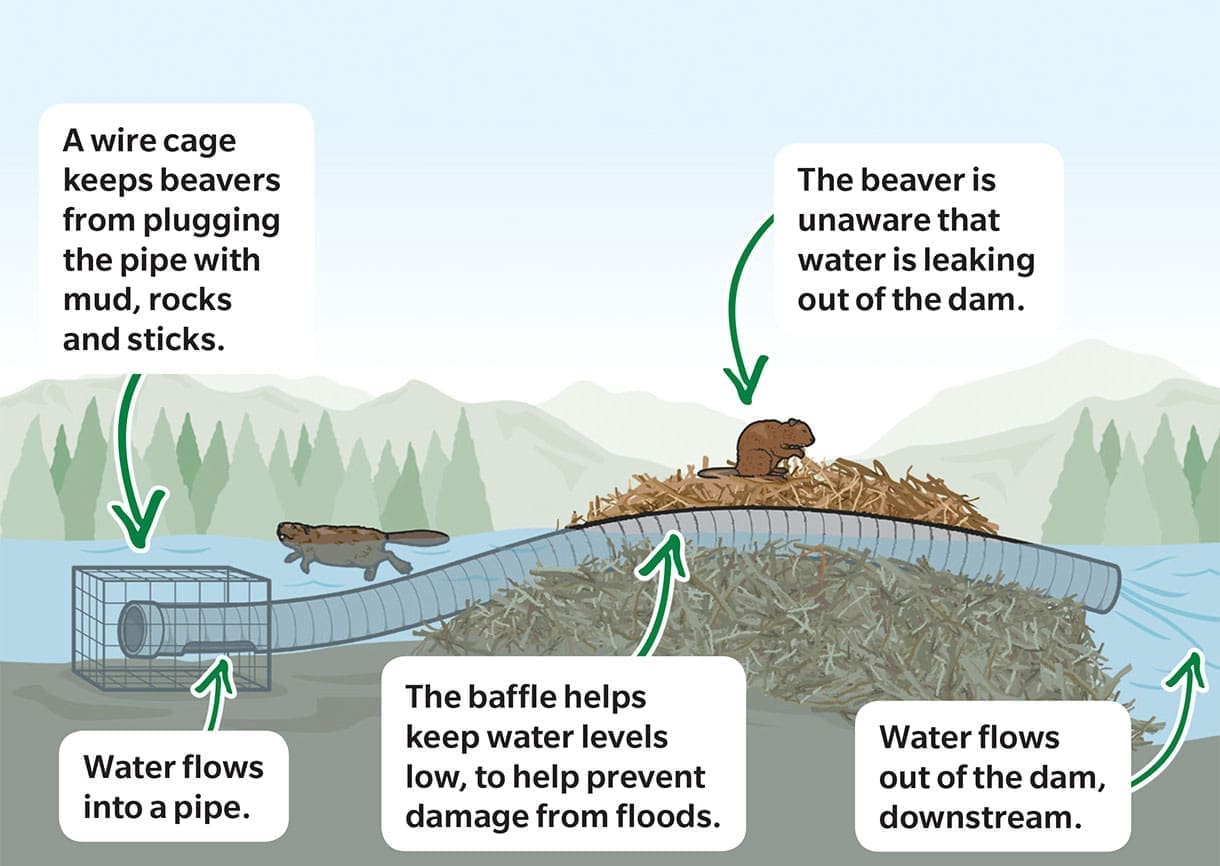
A Beaver Deceiver is a flow device designed to regulate water levels behind a beaver dam without triggering the beavers’ instinct to repair it.
The system typically includes:
-
A pipe installed through a dam or culvert
-
A large protective fence or cage that keeps beavers from clogging the pipe
-
A design that spreads water intake across a wide area so beavers cannot detect the current
Lisle explained the strategy during our conversation:
“You are basically sneaking water away from beavers, thereby controlling damming behavior.”
Beavers respond strongly to the sound and movement of flowing water. When water spills over the top of a dam, they instinctively add sticks and mud to repair it.
Flow devices change that signal.
“By putting a pipe system, or a Beaver Deceiver, in a dam, you’re trying to hold the water down below the top of the dam.”
Without water spilling over the dam, the trigger to keep building disappears.
“You’re eliminating spillover stimuli, water going over the top of the dam. You’re getting a lot less damming behavior.”
Why Getting Rid of Beavers Doesn’t Solve the Problem
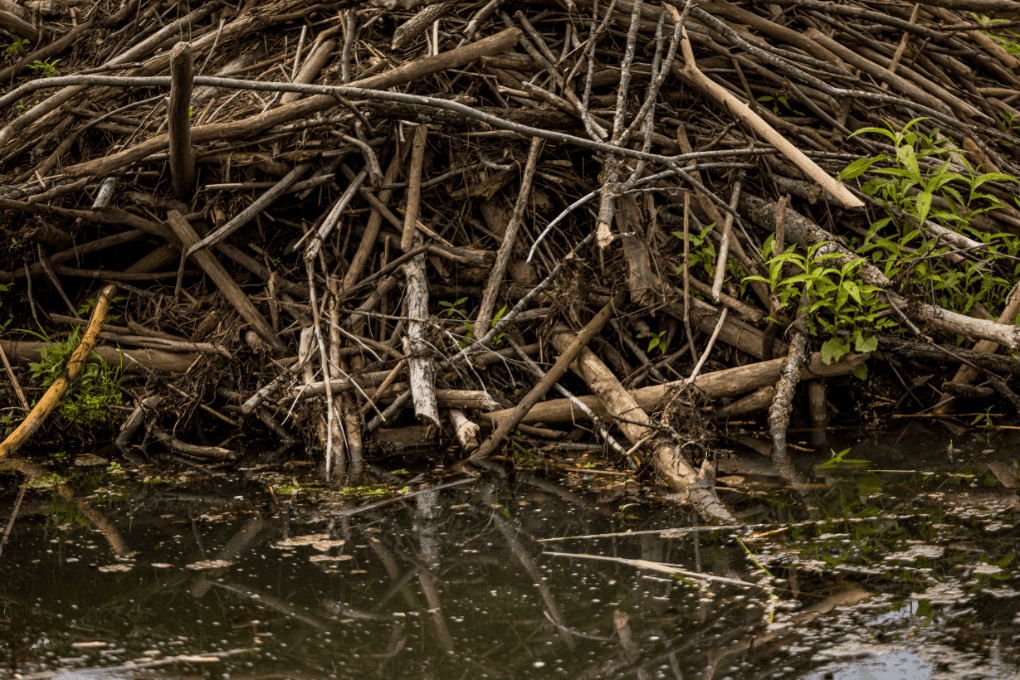
For many years, the common approach to beaver flooding was trapping or killing the animals. But Lisle says this rarely solves the issue. Beavers are excellent explorers of the landscape, constantly searching for new territory with a good place to build a dam. If beavers are removed from one location, new ones often arrive soon after. When that happens, the same culvert or drainage point becomes clogged again. This cycle, sometimes described as “boom and exhume,” can repeat indefinitely.
Culverts are especially vulnerable because, from a beaver’s perspective, they function like small openings in an existing dam. Blocking them is simply part of the beaver’s natural building behavior.
Without a protective system in place, roads and trails may need constant maintenance. Culverts can clog repeatedly, and cleaning them often requires heavy equipment. In some cases, a flooded road can cost tens of thousands of dollars to repair. Flow devices break this cycle by protecting infrastructure while allowing beavers to remain on the landscape.
The Ecological Value of Beaver Wetlands
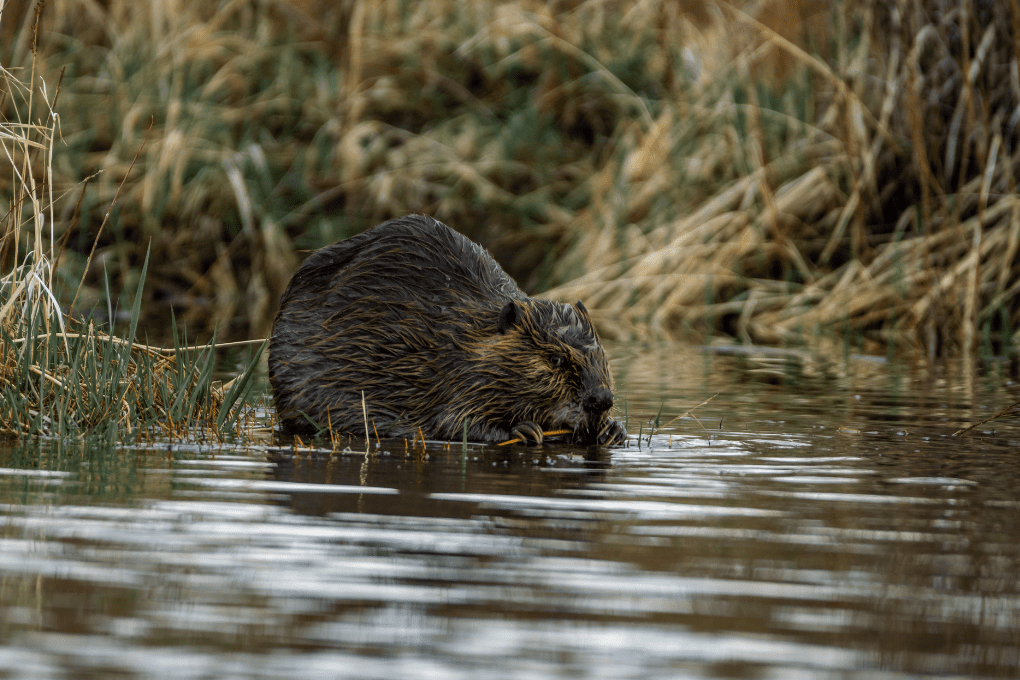
Beavers are widely considered a keystone species because their dams create wetlands that support hundreds of other life forms.
These wetlands provide:
-
Habitat for fish, amphibians, birds, and insects
-
Natural water storage during drought
-
Flood reduction during heavy rain
-
Sediment and pollution filtration
-
Increased biodiversity across the landscape
Historically, North America had far more beavers…and far more wetlands.
Before the fur trade, scientists estimate there were 100 to 200 million beavers across the continent. Their dams created vast networks of wetlands.
Lisle noted the scale of the loss:
“Due to the fur trade, we have drained maybe a million beaver-created wetlands on the continent.”
By the early 1900s, beaver populations had dropped to roughly 100,000 animals in North America, and many wetlands disappeared with them.
Today, beaver populations have rebounded to an estimated 10–15 million, but the continent still contains far fewer beaver-created wetlands than it once did.
Why Beaver Deceivers Work
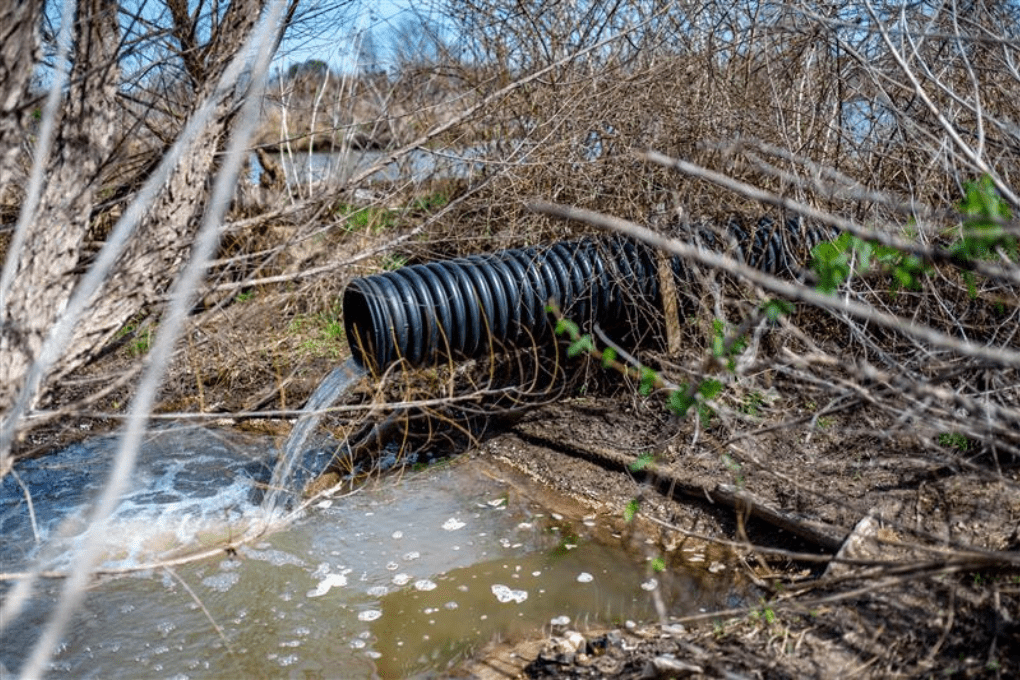
Beaver Deceivers allow humans to protect infrastructure while preserving the ecological benefits of beaver wetlands.
The advantages are significant:
Long-term infrastructure protection
Roads, culverts, and trails remain safe without repeated excavation or repairs.
Lower maintenance costs
Flow devices can function for many years with minimal upkeep.
Wildlife conservation
Beavers remain in place and continue creating wetlands that benefit countless species.
Healthier landscapes
Wetlands improve water quality, support biodiversity, and store water during drought.
Lisle’s work has demonstrated that when culverts are protected instead of repeatedly cleared, communities gain both economic savings and ecological benefits.
A Better Way to Coexist
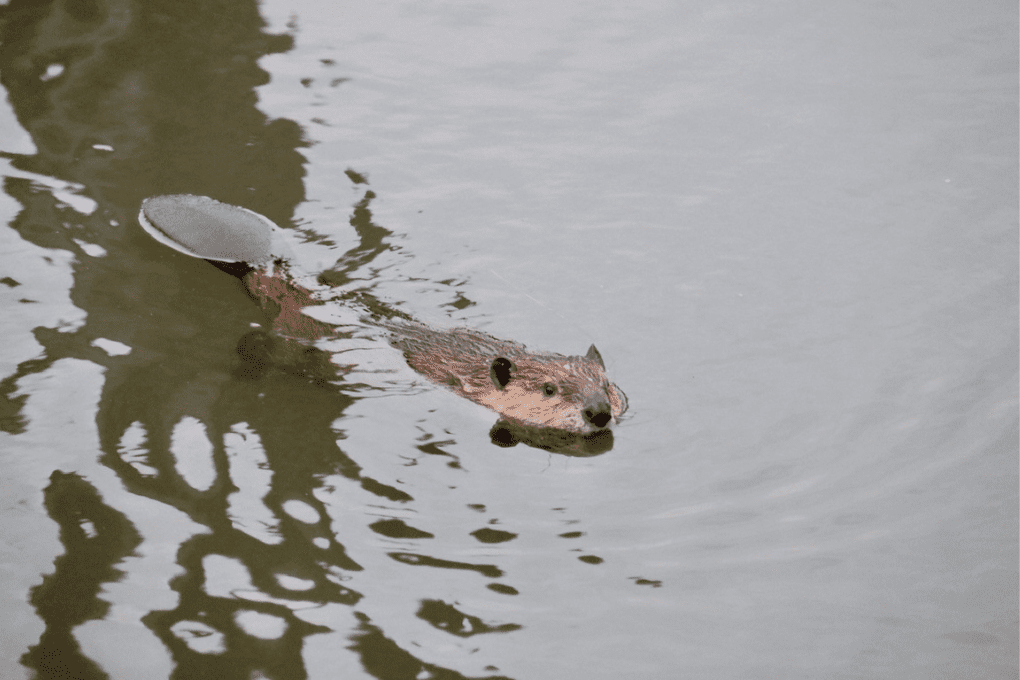
At Osage Park, the Beaver Deceiver helps maintain the park’s wetland ecosystem while preventing flooding near infrastructure.
Instead of fighting the natural behavior of beavers, the system works with it.
As Lisle’s invention shows, the best wildlife management solutions are sometimes the simplest—understanding how animals behave and designing tools that quietly guide that behavior.
In the case of beavers, it’s as simple as sneaking a little water away from the dam!