
The Power of Attraction: How to Create a Pollinator Magnet Garden in Northwest Arkansas
The Power of Attraction: How to Create a Pollinator Magnet Garden in Northwest Arkansas
Valentine’s Day celebrates attraction, and in the garden, that magnetic pull is more than symbolic. It’s biological. It’s essential. Flowers and pollinators have evolved together in an intricate relationship of mutual benefit and communication, one built on scent, color, shape, and even time of day.
In this blog, we’ll explore the fascinating science of how native plants attract pollinators, and how you can design a pollinator magnet garden that brings this dynamic to life in your own backyard in Northwest Arkansas.
What Is Pollination… and Why Should Gardeners Care?
Pollination is the transfer of pollen from one flower to another, enabling fertilization and seed production. This process supports not only wild plant reproduction, but nearly 75% of food crops. In Northwest Arkansas, our most common pollinators include bees, butterflies, moths, hummingbirds, beetles, and flies.
How Plants Attract Pollinators: The Science Behind the Buzz
Nature has equipped flowers wth traits designed to attract specific pollinators:
Color
- Bees see blue, violet, and yellow – coneflowers and goldenrods are favorites
- Butterflies love bright pinks, oranges, and red – like milkweed and Indian blanket
- Hummingbirds are drawn to red and tubular blooms like bee balm
Scent
- Many bees and moths use scent as their primary signal, especially for white or pale flowers
- Fragrant flowers like monarda (bee balm) attract with minty oils
Timing
- Some flowers open or produce nectar at specific times
- Evening-blooming flowers may attract night pollinators like moths and beetles
Shape & Structure
- Flat-topped flowers (like golden Alexanders) are great for short-tongued bees
- Tube-shaped flowers (like penstemon or bee balm) attract long-tongued bees and hummingbirds
- Landing pads help butterflies and beetles feed efficiently
Nectar & Pollen Quality
- High-nectar flowers with rich amino acids provide energy
- Pollen offers protein – especially vital for bee larvae

1. Butterfly Milkweed
-
Bright orange color + deep nectar = butterfly favorite.
-
Monarch host plant — essential for caterpillar development.

2. Purple Coneflower
-
Bees see ultraviolet patterns on petals, guiding them to the nectar source.
-
Later, seeds provide food for songbirds.

3. Wild Bee Balm
-
Tubular blooms and minty scent attract bees and hummingbirds.
-
One of the earliest nectar sources in the Ozarks.

4. Golden Alexanders
-
Flat-topped umbels accommodate beetles, flies, and short-tongued bees.
-
Blooms in spring when pollinators emerge hungry.
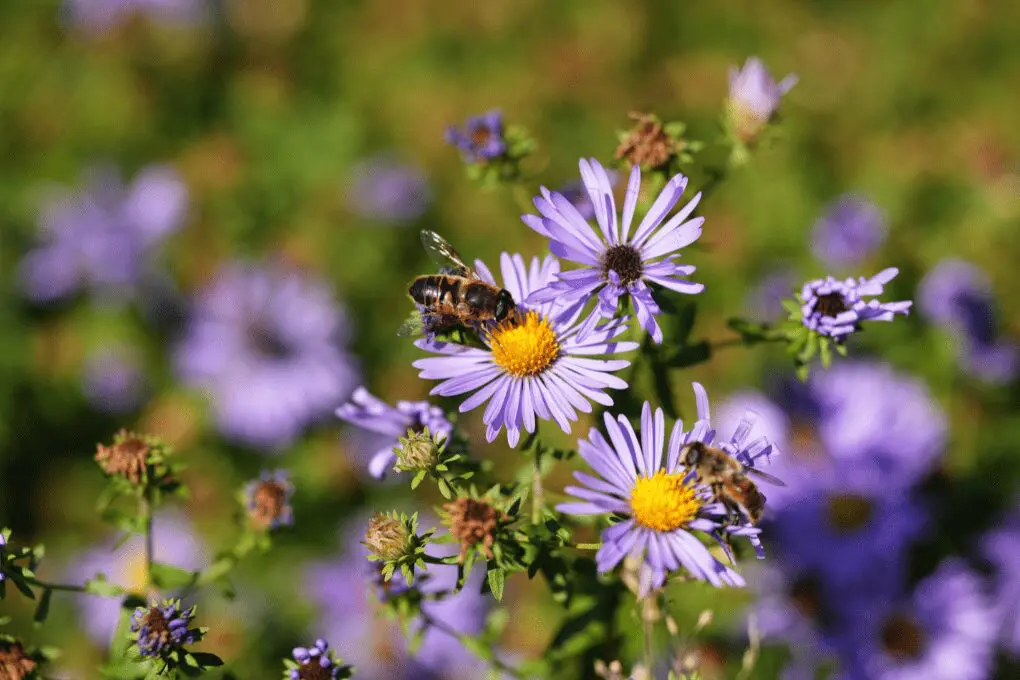
5. Aromatic Aster
-
Critical late-season nectar supply when few other plants bloom.
-
Supports fall-migrating butterflies like monarchs.

6. Joe Pye Weed
-
Tall, showy blooms with dense nectar attract butterflies, especially swallowtails.

7. Blue Mistflower
-
Soft landing space for small butterflies and native bees.
-
Blooms in late summer through early fall.
How to Design a Pollinator-Friendly Garden in NW Arkansas
Plant in Groups
-
Pollinators prefer clusters of flowers over scattered individuals.
-
Helps them conserve energy and improves foraging efficiency.
Create Seasonal Succession
-
Include early-, mid-, and late-season bloomers.
-
A year-round buffet means pollinators keep coming back.
Add Host Plants
-
Butterflies like monarchs and swallowtails lay eggs on specific plants (like milkweed and parsley).
-
Including these creates habitat, not just food.
Choose the Right Site
-
Match sun/shade and soil moisture to plant needs.
-
Dry sunny spots = coneflower, milkweed; moist areas = Joe Pye, mistflower.
What to Avoid
-
Pesticides & herbicides: Even “natural” ones can kill pollinators.
-
Double blooms: Often bred for looks, not nectar or pollen.
-
Exotics: They may look pretty but often lack the right cues for local pollinators.
See the Power of Attraction First-Hand
Want to see these relationships in action? Come walk through Compton Gardens & Arboretum in Bentonville. You’ll spot pollinators in every season, discover native plants up close, and leave inspired to create your own habitat at home.