

Ecosystem
at Osage Park
Restorative Landscape
“When we try to pick out anything by itself we find that it is bound fast by a thousand invisible cords that cannot be broken, to everything in the universe.” – John Muir’s journal for July 27, 1869
The four main landscape zones within Osage Park
Lake Shoreline →
Dry Prairie →
Wet Prairie →
Beaver Wetland →
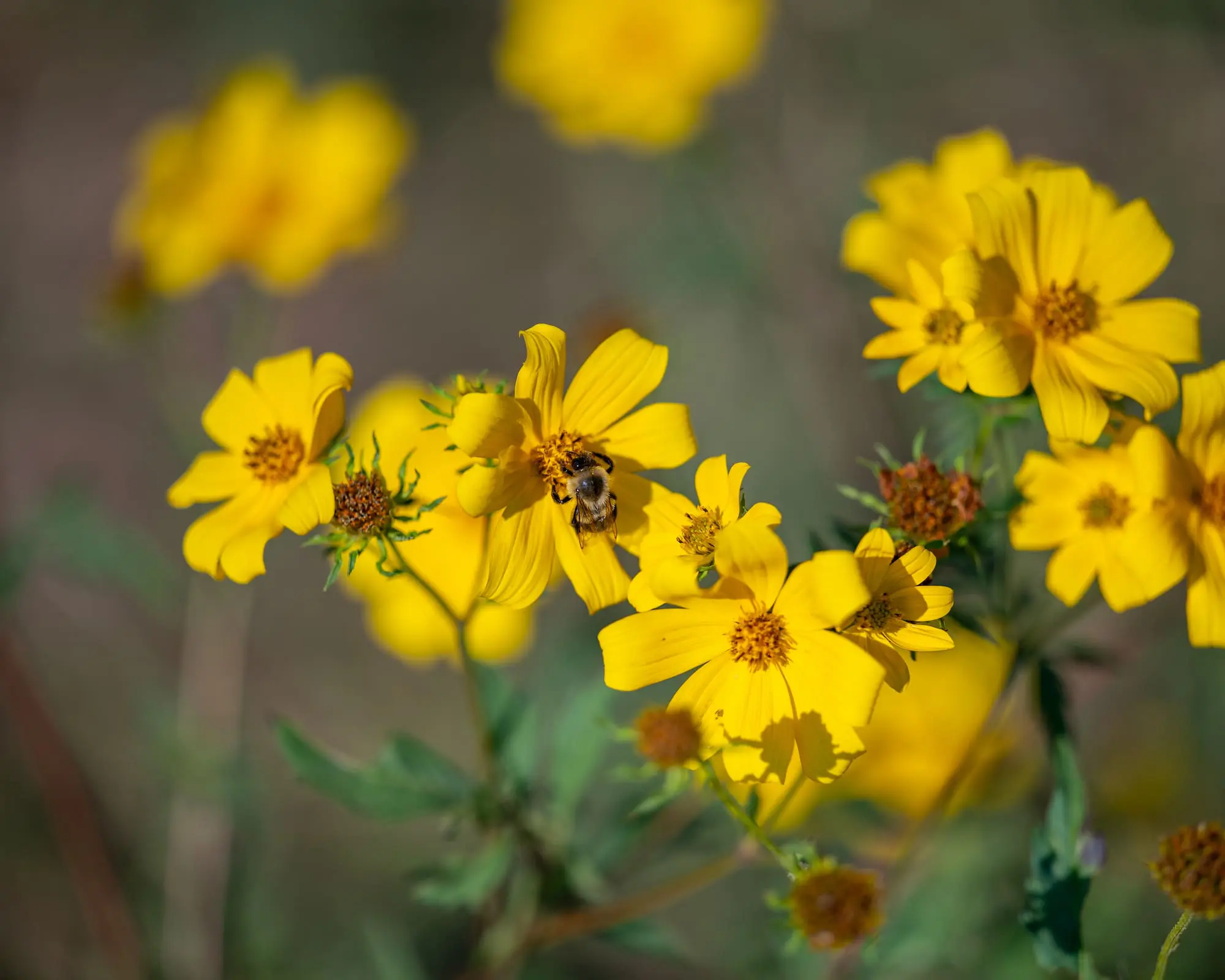
Welcome to Osage Park
The diversity of landscapes in this small area will amaze you. Trails lead through prairies, past the lake, and into a natural beaver wetland. Osage Park has been divided into landscape types. Each has a story to tell and an iconic species to help tell it. The stories connect us to the land, to the water, and to the need to care for such places. Throughout the park look for tangible things around you: bees, dragonflies, wildflowers, butterflies, and seeds. Also, sense the invisible: warmth from the sun, wind, flight, and music.
Tiny swamp milkweed seeds catch the wind and take flight.
Learn More
In fall swamp milkweed pods break open. The tiny seeds are dispersed by the wind, blowing over the landscape seeking the right conditions to germinate and grow. Monarch butterflies depend on the milkweed plant and we depend on the butterfly and many other insects to pollinate the food we eat. Even the smallest seed has great importance and is connected to a network of life.
What can you do to help?
Learn More
Encourage local businesses, developers, institutions, and governments to adopt ‘best management practices’ that protect the environment. Only through sustainable living will we provide rare and declining species, like the honeybee and the monarch butterfly, the habitat and resources they need to survive alongside us.
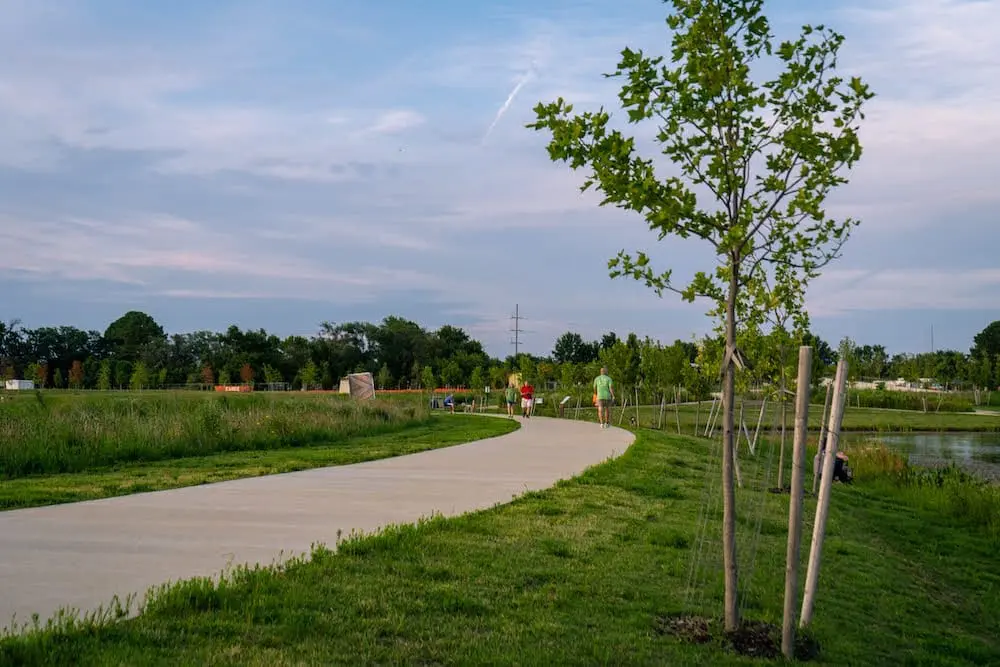
Lake Shoreline
Discover the native plants in Osage Park’s lake shoreline below.
Site Hydrology
Shoreline plants also reduce the amount of harmful algae by out-competing algae for nitrogen in the water and use waste materials from fish, providing a natural water filtration mechanism.
Dragonflies
Learn More
Dragonflies catch thousands of mosquitoes and eat them in flight
No other insects symbolize summer quite like this group of colorful, primitive-looking predatory insects. Long before the dinosaurs roamed Earth, dragonflies took to the air. They have been flying for over 300 million years. They can fly at speeds of 30 miles per hour, which makes them some of the fastest insects in the world. Plus, because they control each wing independently, these amazing insects can stop, hover, or turn on a dime.
What can you do to help?
Learn More
Put away the mower and leave the pond fringes fuzzy.
Plants are vital to a healthy aquatic ecosystem. They provide food and habitat for the creatures living in the pond. For example, dragonflies begin life as aquatic larva living underwater until they crawl up emergent aquatic plants, such as the pickerelweed. Then they attach to the plant to begin their metamorphosis into adult dragonflies.
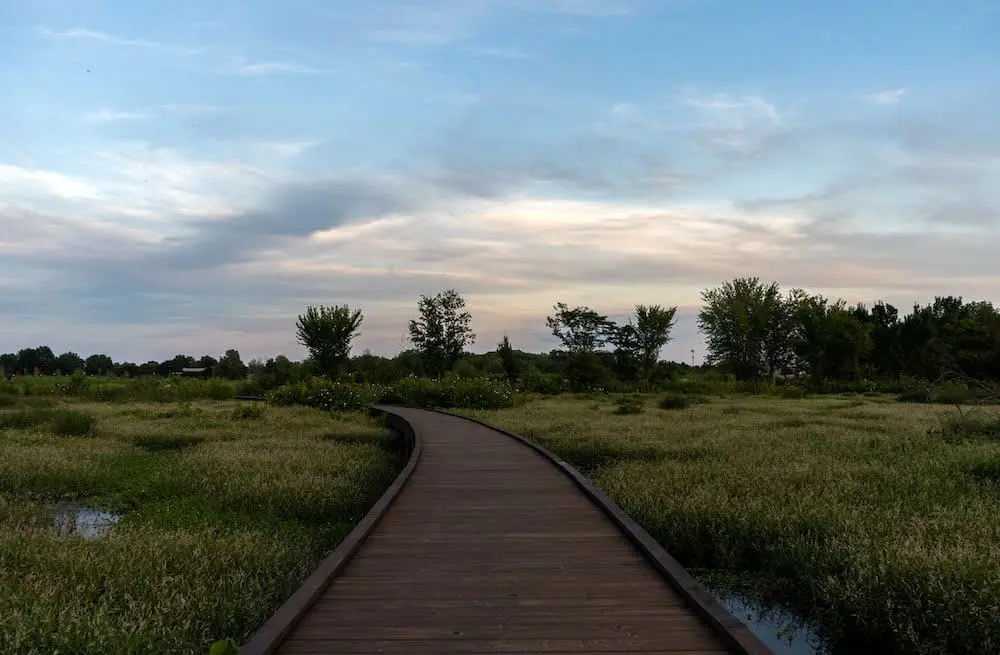
The Wet Prairie
A place of mystery, beauty, and life. Here at Osage Park we have several types of habitat, all based on the amount and type of water they receive, including two types of prairie: dry and wet. The difference is obvious–water!
Discover the native plants in Osage Park’s wet prairie below.
Green Infrastructure Strategies
The design of Osage Park uses the landscape to protect against flooding and improve water quality. Flood events vary from minor to major. The Osage Park wet prairie is designed as ‘soft infrastructure.’ It floods, soaks up water, and slowly releases it, decreasing flood downstream.
Slow runoff, store water, and decrease flooding impact
Reduce soil loss and rebuild the soil structure
Act as a natural filter that cleanses water
The story of the monarch and the milkweed.
Learn More
There is a symbiotic relationship between native milkweed plants and the monarch. Monarch butterflies enjoy the nectar from the flowers and help pollinate the milkweed. Monarchs lay eggs ONLY on the undersides of milkweed leaves. The milkweed leaves they eat make monarch caterpillars and the adult butterflies slightly toxic and unpalatable to most predators. Without the milkweed, we lose the monarch.
What can you do to help?
Learn More
Plant a pollinator garden with swamp milkweed.
Monarch butterflies are native to North and South America. They migrate here in spring and search for milkweed to lay eggs. They can’t survive our cold winters, so each autumn they migrate thousands of miles back to Mexico. To help monarchs you can plant milkweed. When the monarchs return next spring, the bright, beautiful flowers will attract them to their favorite plants–in your garden.
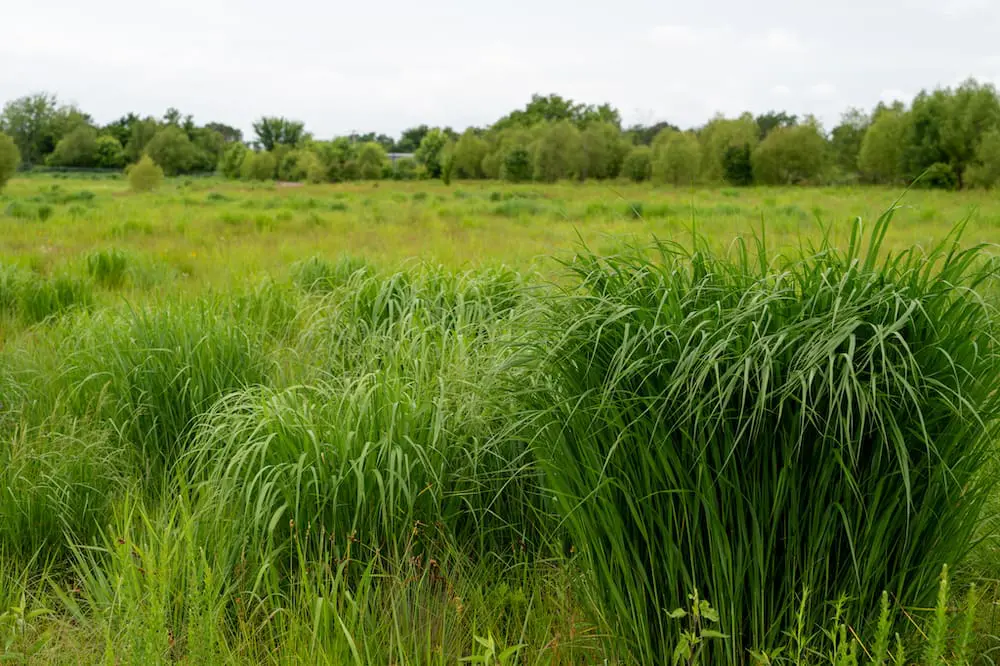
The Dry Prairie
A dry prairie is a natural plant community of low shrubs and grasses occupying vast, level expanses of land. The open dry prairie is an essential habitat for several rare plants and animals.
Discover the native plants in Osage Park’s dry prairie below.
Pre-Settlement Extent of Dry Prairie in NWA
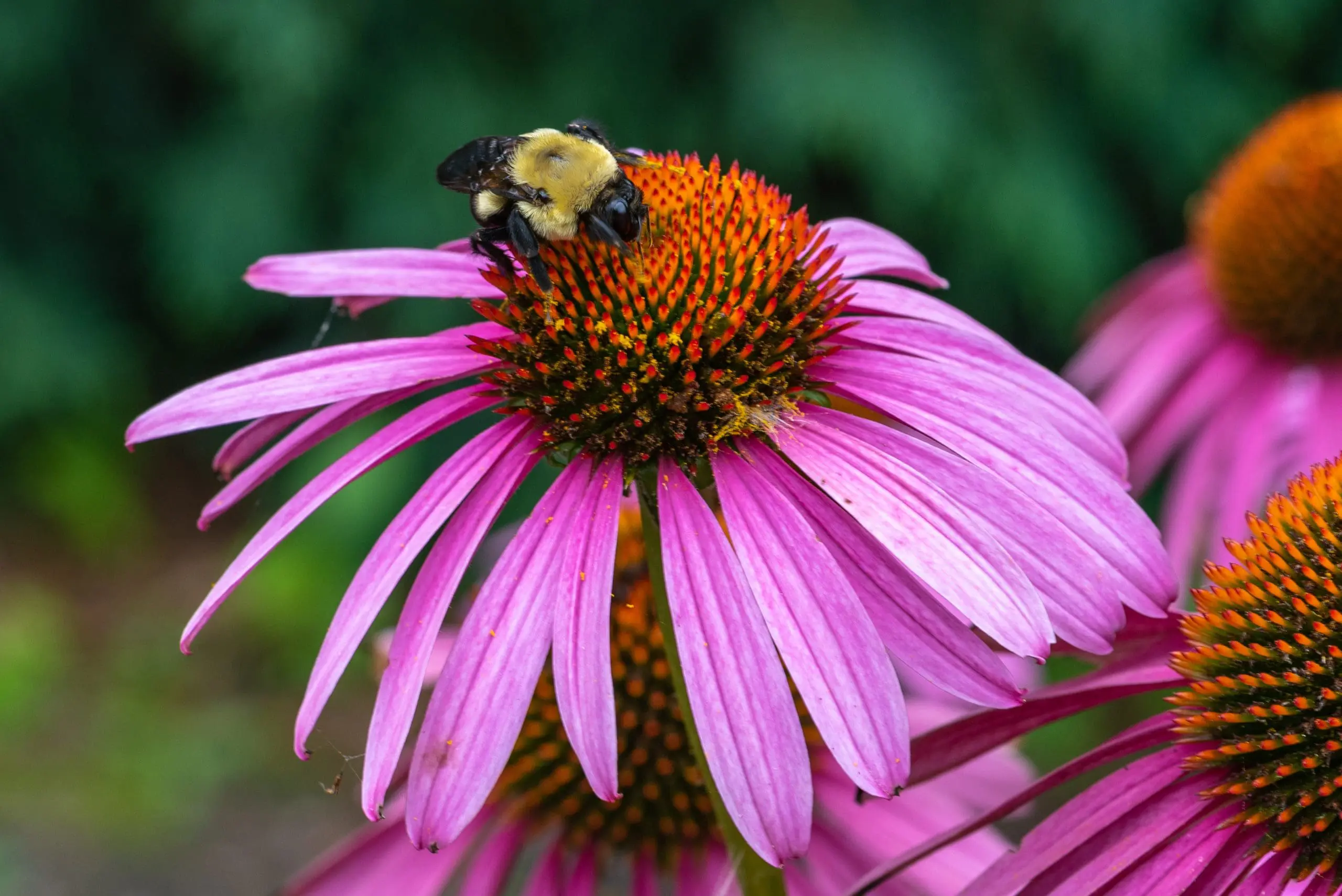
The honey bee’s relationship with the purple coneflower is a story of support and survival.
Learn More
What can you do to help?
Learn More
Bees should be a welcome guest in your garden.
Bees play an important role in our ecosystem. The benefits they provide to farmers, gardeners, wild plants, and our own food supply are enormous. It’s been said that if bees die, we die. Despite their importance, many bee species are declining. Roughly a quarter of our native bee species are now endangered. This is primarily due to herbicides killing wildflowers and the destruction of nesting habitats.
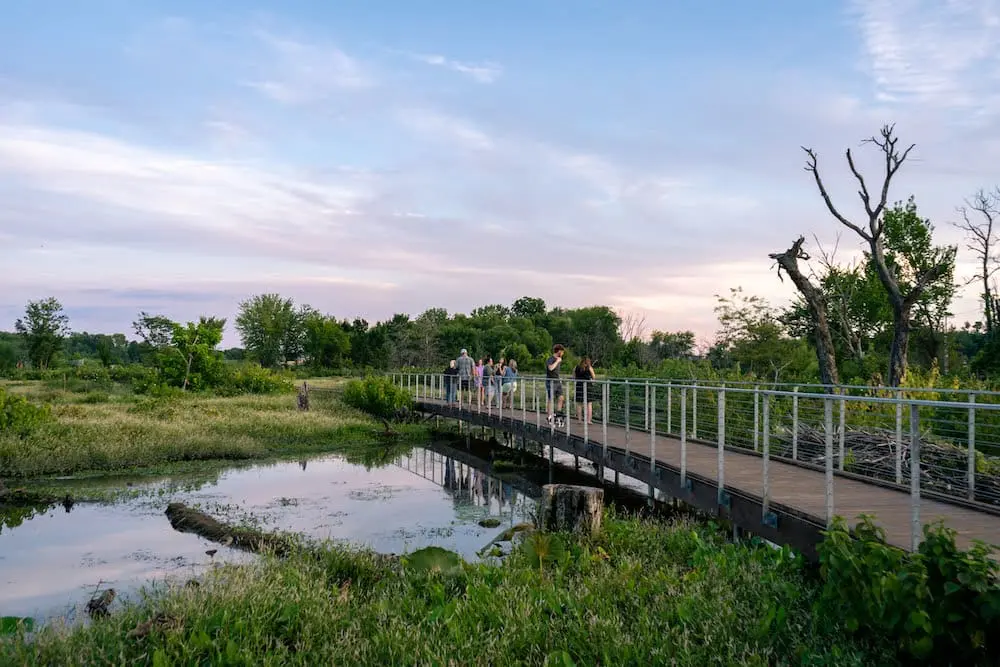
Beaver Wetland
Discover the native plants in Osage Park’s beaver wetland below.
Conditions prior to Osage Park
The wetlands created by beaver dams on this site provide habitat for many species, including several of conservation concern. These wetlands also slow stormwater runoff, improve water quality, help recharge groundwater aquifers, and reduce flooding downstream.
Beavers start construction by driving branches and logs vertically into the mud of the streambed to form a base. Then sticks, bark, mud, rocks, grass, leaves, and masses of plants are used to build the dam. It takes a beaver about twenty minutes to cut down a six-inch diameter tree.
What do beavers eat?
Learn More
Beaver - Human Encounters
Learn More
Beavers can cause property damage such as cutting down trees. The Beaver Institute, Inc., helped develop a beaver management plan for Osage Park, including two techniques used to minimize damage to trees and riparian vegetation:
1. Beaver Deceivers: these pipes allow high water to drain off, keeping the pond at one level so the beavers don’t feel the need to increase the height of their dams, which can drown nearby plants.
2. Tree Protection: add wire mesh around the base of selected trees.